An official website of the Commonwealth of Massachusetts Here's how you knowHere's how you know

Legal Permanent Resident - SNAP
Eligibility Requirements
Lawful Permanent Residents (LPRs) (also known as Green Card holders) are eligible for SNAP after a 5-year waiting period as a qualified noncitizen (unless exempt as seen below), provided they meet all other SNAP financial and non-financial eligibility requirements.
LPRs Not Subject to a 5-Year Waiting Period
A noncitizen present in the U.S. as a Legal Permanent Resident (LPR) is not held to a 5-year waiting period and is an eligible immediately meets the noncitizen eligibility requirements for SNAP when:
- They, prior to adjustment to LPR status, were:
- A Refugee under section 207 of the INA
Note: Individuals who have adjusted to LPR status from Refugee status may have immigration documentation with a COA Code including but not limited to, RE-6, RE-7, RE-8, or RE-9.
- A Victim of Severe Forms of Trafficking;
- An Asylee under section 208 of the INA;
Note: Individuals who have adjusted to LPR status from Asylee status may have immigration documentation with a COA Code including but not limited to, AS-6, AS-7, or AS-8.
- A noncitizen whose Deportation is Withheld under section 243(h) or 241(b)(3) of the INA;
- A Cuban/Haitian Entrant (as defined in section 501(e) of the Refugee Education Assistance Act of 1980); or
- An Amerasian immigrant (as defined in section 584 of the Foreign operations, Export Financing and Related Programs Appropriations Act, 1988).
- Certain Afghan Nationals Granted Parole Between July 31, 2021, and September 30, 2023
- Iraqi and Afghan Special Immigrants (SIV)
- Certain Ukrainian Nationals Granted Parole Between February 24, 2022, and September 30, 2024
- Hmong and Highland Laotian tribal Members
- American Indians born abroad
Note: Amerasians and Cuban-Haitian Entrants are immediately eligible for SNAP regardless of the fact that their status was adjusted to LPR.
- They have resided as a qualified noncitizen in the U.S. for five years;
- They are an elderly noncitizen born on or before 8/22/31 and who was lawfully residing in the U.S. on 8/22/96;
- They are a child under 18 years of age;
- They are a Disabled Noncitizen;
- They are a Veteran or Active Duty Personnel;
- They have worked a minimum of 40 Qualifying Quarters under Title II of the Social Security Act including qualifying quarters of work not covered by Title II;
Important: If a client does not appear to meet eligibility as an LPR as outlined in the above Eligibility Requirements, you must explore eligibility based on qualifying work quarters.
- They can be credited with a total of 40 qualifying quarters under Title II of the Social Security Act as worked by a combination of:
- The noncitizen;
- The parent(s) of the noncitizen while the noncitizen was under age 18, including quarters worked before the noncitizen was born or adopted; and/or
- The spouse of the noncitizen during their marriage if the noncitizen remains married to the spouse or is widowed.
Note: No quarter may be claimed after 12/31/96 if benefits from a federal means-tested program, as defined below, were received from any state during that same quarter.
An LPR may be eligible for SNAP benefits for up to six months until quarters are verified. If the LPR does not meet the 40 qualifying quarters and has no other eligibility factor such as disability or five years of residency, the LPR is ineligible.
Federal Means-Tested Program
The following are federal means-tested programs for purposes of determining qualifying quarters:
- SNAP
- Transitional Assistance to Families with Dependent Children (TAFDC)
- SSI
- Medicaid
- State Child Health Insurance Program (SCHIP)
- Temporary Assistance for Needy Families (TANF)
- Nutrition Assistance Program (NAP) in Puerto Rico, American Samoa and the Northern Marianas (CNMI)
Verification of Legal Permanent Resident
A noncitizen who reports they have LPR status may verify the status as follows:
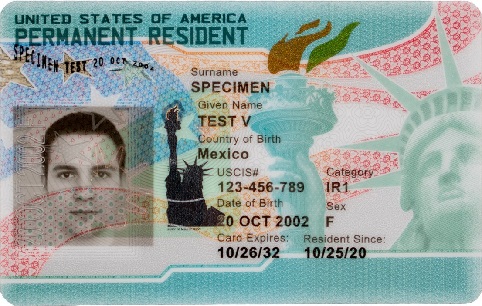
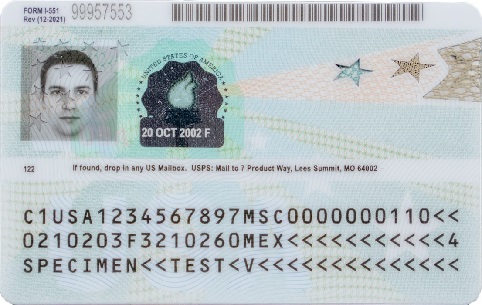
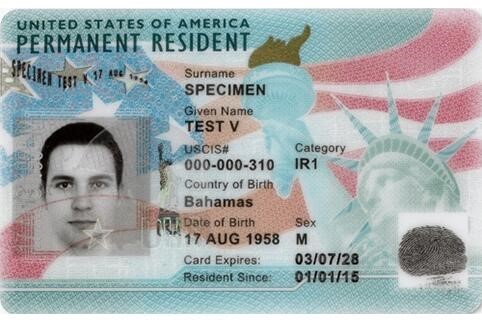
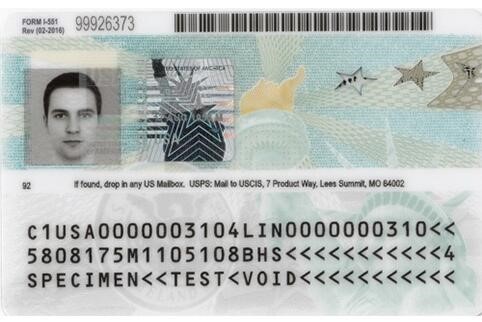
- Permanent Resident Card (a.k.a. Green Card ) (form I-551; earlier versions are the I-151, AR-2 and AR-3)
When a permanent resident card is expired, if the client’s noncitizen status cannot be verified through SAVE, you must send the case to the Procedural Mailbox for review.
Clarification on Conditional Resident versus Conditional Entrant
SAVE will occasionally return an Applicant Status of “Conditional Resident”. A Conditional Resident is an LPR with conditions on their status. These individuals are held to Legal Permanent Resident eligibility criteria, and they must be coded as Legal Permanent Resident in the Noncitizen Designation page of BEACON. You must not code an individual with a SAVE response of Conditional Resident as a Conditional Entrant.
Conditional Resident is not to be confused with Conditional Entrant. Conditional Entrant status has not been used since 1980.
While many individuals who originally entered the US as Conditional Entrants have adjusted to Legal Permanent Resident (LPR) status, others still hold their original conditional entrant status, as it was a distinct immigration category and not the same as LPR.
Current Permanent Resident Card issued on January 30, 2023:
Previous Permanent Resident Card issued on May 1, 2017:
Previous Version of the Permanent Resident Card with Signature:
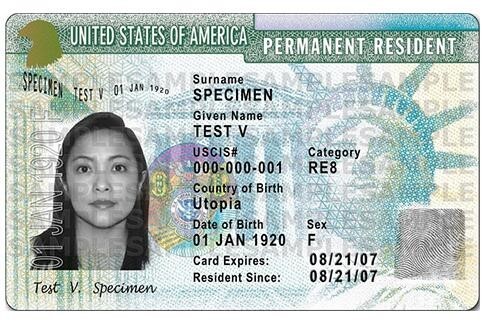
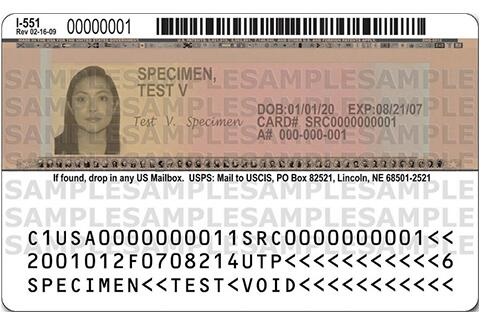
Previous Version of Permanent Resident Card with Notation, "Signature Waived":
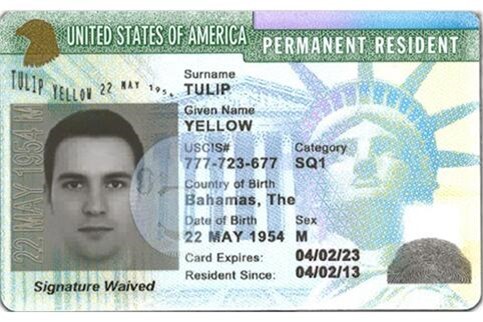
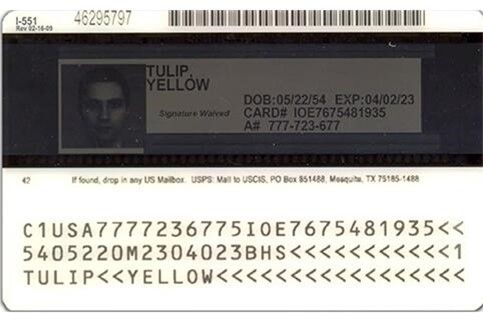
*Card images credited to the USCIS website*
- Reentry Permit (I-327);
- Foreign passport stamped to show temporary evidence of LPR or I551 status;
- Memorandum of Creation of Lawful Permanent Residence with approval stamp (I-181);
- Order issued by USCIS, an Immigration judge, the Board of Immigration Appeals (BIA), or a federal court granting registry, suspension of deportation, cancellation of removal, or adjustment of status; or
- Any verification from USCIS or other authoritative document.
Sponsor Deeming (Noncategorically Eligible Households Only)
Sponsor Deeming is the counting of the income and assets of the sponsor(s) based on the amount on the affidavit of support or current verification of the sponsor(s)' circumstances whether or not monies are actually given to the sponsored noncitizen. Sponsor deeming information may be requested on the request additional verification window of SAVE.
Noncitizen Opt-Out Notice
Legal Permanent Residents who previously applied for SNAP benefits, but were determined to be ineligible household members based on not meeting the five-year noncitizen eligibility requirement, may opt-in or opt-out of being added as an eligible member to the household once they meet the five-year requirement.
When a Legal Permanent Resident meets the five-year requirement which would allow them to be included as recipients of DTA benefits, the grantee of the household will be sent a notice informing them that one or more members of their household may be eligible for DTA benefits. The notice further advises that the client has the right to opt-out of receiving benefits. This notice will be mailed out 30 days prior to the household member(s) reaching the 5-year requirement.
For more information on how to process noncitizens opting out of SNAP benefits please refer to the Noncitizen Opt-Out OLG page.
Related Topics
Entering Noncitizen Designation
Entering Legal Permanent Resident Data
Legal Permanent Resident Policy and Procedures
Verification of Immigration Status
Last updated: March 10, 2026
|
|
|
||
| Digital Accessibility Statement | Privacy Policy | Site Policies | Public Records Requests |
|
© 2026 Commonwealth of Massachusetts. Mass.gov is a registered service mark of the Commonwealth of Massachusetts. |
|||