An official website of the Commonwealth of Massachusetts Here's how you knowHere's how you know

Simplified Reporting – Examples
Reporting Requirements
Q1. If a client is on Simplified Reporting, when must they report income changes?
A1. All Simplified Reporting households must report and verify income at application and recertification and when their income exceeds the limit for their household size.
Simplified Reporting (Former EDSAP) and SIMP-12 households must report and verify income at Interim Report if they:
- get a new source of income,
- have any change in earned income (i.e. change in pay per hour, salary amount, starting, stopping or changing full-time or part-time status), and/or
- their unearned income changes by more than $125 (increase or decrease) at the household level.
Outside of those reporting periods, households subject to a gross income limit are only required to report and verify changes when their gross monthly income exceeds the limit for the household size.
EDSAP Reporting households must report when a household member begins to receive earned income in any amount. These households must also report when an individual moves into or out of the household.
Q2. Are all Simplified Reporting households subject to a gross income limit?
A2. No, Simplified Reporting households with at least one elderly and/or federally certified as disabled member are not subject to a gross income limit for SNAP eligibility.
Although elderly/disabled SNAP households are not subject to a gross income limit for SNAP eligibility, they are subject to the 200% gross income limit for categorical eligibility purposes.
Q3. Are Simplified Reporting households with at least one elderly and/or disabled member required to report income changes during the case maintenance period?
A3. No. These households do not have a gross income limit and are only required to report income changes during reporting periods.
Q4. Does a household certified as Simplified Reporting (former EDSAP) have to report income above the gross income limit?
A4. No, Simplified Reporting (former EDSAP) households will always include an elderly and/or disabled household member as the case head, therefore the household is not subject to a gross income limit.
Q5. How many Interim Reports will a Simplified Reporting (former EDSAP) household receive?
A5. These households will receive Interim Reports every 6 months until the end of the certification period provided the household remains on Simplified Reporting (former EDSAP).
Q6. Will a household be assigned a new gross income limit if they experience a change in household size during the Interim Reporting period?
A6. No, gross income limits are assigned based upon your reported household size at application or recertification.
Q7. If a client is on Simplified Reporting and calls to report a change of residential address outside of their required reporting period, should I send a VC-1?
A7. Changes in residential address is not required to be reported for Simplified Reporting households. However, if the client does report a change in residential address, then they are not allowed to keep existing shelter and utility expenses. You must send a VC-1 for proof of the new shelter and utility costs.
- End the existing shelter expense record.
- Enter a new expense record with the correct amount stated by the client.
Important: When adding a new expense record after ending the old record, a pop-up message will appear to warn that a duplicate expense item is being entered. View/HideView/Hide
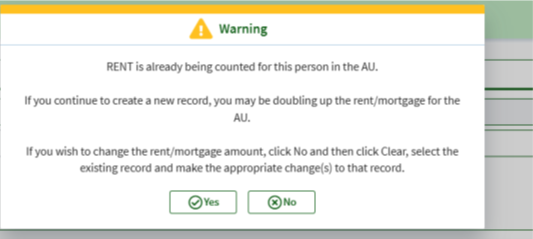
- Send the VC-1 that generates with the new shelter expense record. Do not verify the verification item.
- For SUA, you must input the information that the client indicates on the Recertification form. Once completed, BEACON will remove the old SUA record and leave the new SUA amounts unverified.
- Wrap and authorize the case without crediting the shelter and/or SUA expense. Review the EBC calculation to make sure the SNAP benefits are accurate.
- If the verification is subsequently received, enter it into BEACON, verify on the Verification tab, and wrap/authorize the SNAP case to credit the household with the expense.
Assess whether a related benefit is owed for SNAP based on when the verification was received and when the change will take effect.
Important: The following procedures are only for clients that indicate a change of residential address outside of DTA Connect (i.e. contacts the DTA Assistance Line or uploads a letter with this information).
For clients that submit the change via DTA Connect, the system will automatically remove and end the old expense records and create new records with the updated information and leave it unverified. You must leave the new expense amounts entered in BEACON and VC-1 accordingly. BEACON will not count the unverified expense amounts until they are verified.
After you send the VC-1, disposition the action and wrap the case without crediting the client with shelter and SUA. (However, if the client was already credited with H-EAT or HEAP, they must retain those credits and continue getting the Heating/Cooling SUA.)
If not counting the expense results in a $0 benefit level or the case being denied for over-income, the case must not be wrapped at this time. Rather, you must follow these steps:
- Remove the authorization to process the case.
- Create an Action to process the change the day after the VC-1 Due Date (for more information on creating an Action, see Creating Follow-up Actions).
- If the optional verification is received, enter the expense(s) and recalculate the benefits.
- If verification is not received, process the case without entering the expense(s).
For more information, see Simplified Reporting During Case Maintenance.
Case Maintenance
Q1. My client submitted a handwritten note reporting a change of address in between reporting periods. Do I send a VC-1?
A1. Yes. If MA residency was previously verified at application and the client is reporting a move to another address within the state, you must send a VC-1 for proof of only the new shelter and utility costs by following the procedures outlined in Question 7 above.
Q2: I received an action to review a PI Checklist for a DOR Bank match for an elderly/ disabled household during case maintenance. Should I act on it?
A2: No. There are times when households become non-categorically eligible for SNAP during their certification period. These are elderly/disabled households who are not subject to a gross income limit for SNAP eligibility.
For example, an elderly/disabled household member receives an increase in income due to the SSA COLA, and this amount puts the household over the 200% categorical eligibility standard. BEACON will automatically convert the household to non-categorically eligible and prompt the DOR Bank match to be applied to the case.
When a case changes from categorically eligible to non-categorically eligible during the certification period for Simplified Reporting households (including EDSAP households), DTA staff must not address assets nor request verification of assets until the household’s next reporting period.
The Data Match Unit (DMU) must disposition these bank matches and not request additional verification from the household. A narrative must be entered for the next worker to address assets at the household’s next reporting period.
Interim Report Processing
Q1. Do I need to check external databases when a client submits an Interim Report?
A1. Since the case is active and at IR, certain program integrity checks have automatically been applied to the case (i.e., Work Number, UC, and SDX/Bendex). The two external data sources that are not automatically run are RAPID and SAVE. At IR, you must only review data sources that are applicable to the case. For more information on which databases to review, see External Databases.
Q2. How can clients submit an Interim Report?
A2. Clients can submit an Interim Report:
- interactively through DTAConnect.com
- via upload of a completed paper form on DTAConnect.com
- via upload of a completed paper form on the DTAConnect mobile app
- via mail
- via fax
- in-person through a self-scanning device
- by completing the process with a case manager in a TAO
Q3. What should I do if a client submits a signed Interim Report but did not answer any of the expense questions?
A3. The expenses that were previously used in the benefit calculation must remain.
The expense portion of the Interim Report is optional and is only meant to capture changes that the client elects to report.
If the client submitted the Interim Report online, did not change their residential address, and did not answer any expense questions (as applicable to them) on the online workflow, the client’s IR datasheet will not have any expense sections displayed.
The absence of an expense section on the IR datasheet indicates either 1) the expense section was not applicable to the household, or 2) the household did not move and made no changes to any of their existing records for that type of expense.
Q4. On the Interim Report datasheet, I see that my client reconfirmed all their household members’ existing unearned income and reported that their household’s gross unearned income did not change by more than $125. Should I send a VC-1 for unearned income?
A4. No. Further verification must not be requested for unearned income as the client reported that their household’s gross unearned income did not change above the $125 threshold. Unlike earned income, there is a $125 reporting threshold at IR for unearned income. If the client reported no other changes (e.g., residential address; optional expenses did not change) and there are no outstanding Program Integrity concerns, you must process the Interim Report with no changes and write a Narrative.
Q5. I received an Interim Report with a reported change of $60 in earned income and $80 of unearned income per month. Do I need to send a VC-1 for both income types since the total is greater than $125?
A5. No, you only need to send a VC-1 for the change in earned income. Since the change in unearned income is less than $125, the unearned income type must be left alone.
Q6. A client submitted their Interim Report via DTA Connect. On the Interim Report datasheet, I see that my client changed their residential address and has their Shelter Expenses and Utility Costs sections indicated as “No Response”. What does this mean? Do I remove the expenses and send a VC-1?
A6. This means that the client reported their address changed but did not answer any questions regarding their new shelter and utility costs as part of the online IR workflow when they were asked. As housing costs must be reverified at IR when a household moves, the system has automatically removed the client’s existing shelter and utility costs in BEACON upon the client’s online IR submission. You must go ahead and process the IR without any shelter and utility expenses, and send out an optional VC-1 to the client for the new shelter and utility costs. If the client returns the verification, they may be entitled to a related benefit.
Q7. A client whose SSN ends in 0 submitted their IR for January 2026. They indicated that their biweekly earnings are expected to change before January 31. When I spoke with the client, they said the earnings will change and be reflected on their pay stub for January 25. Do I have to use that information to process the IR even though the change has not yet occurred? What can they submit for verification?
A7. Yes, you must process the IR with the anticipated hour and income amounts. Ongoing income entered into BEACON, whether based on past or future income amounts, is supposed to reflect what the client will be getting in the six months after the certification midpoint. For verification, the client can submit a signed letter from their boss indicating their new hourly rate and weekly hours. Other verification options include HR portal screenshots, copy of new contract/offer, etc.
Q8. A client whose SSN ends in 0 submitted their IR for April 2026. They indicated that their earnings are expected to change before April 30. When I spoke with the client, they said their earnings will change on April 25. When I asked them to submit a letter verifying their new hourly rate and weekly hours, the client said that the hourly rate is changing but there is no way to know what the weekly hours will be because they have always worked on a variable schedule. What can the client use for verification?
A8. If the client works on a variable schedule, they must verify two different things—one to verify their new rate, and the other to verify their average hours. To verify the new rate, the client may submit a letter from their boss. To verify their average hours, the client may submit copies of their last four pay stubs. If the hours on the pay stubs vary so widely that it is difficult to determine whether the calculated average hours is truly representative of the client’s schedule, then you must request verification of the client’s hours over a longer timeframe (e.g., three months).
Q9. If a client indicates on the IR that their job will end within 30 days after their certification midpoint, do I need to request proof of wages for the month in which the job will end?
A9. When a client expects their job to end after the certification midpoint, you must process the IR with the existing earned income record. In this instance, staff must not remove the record at IR. If the client subsequently verifies termination of the job during case maintenance, a FAW can remove the job record and recalculate the client’s benefits. If the client’s wages have not changed, no additional verification is required.
Q10. What do I do if the client checks “This job will end” but does not know the exact date?
A10. You must retain the pertinent job record in BEACON. You can process the IR with the earnings. If you happen to be speaking with the client, advise them to report back to DTA when the job ends, as this will most likely result in their benefit level increasing, provided the client also verifies that the job has ended.
Q11. At IR, the client indicated on the form that they expect their income to change. But a few days after submitting the form, they called the DTA Assistance Line and clarified that they will be working overtime over the next month. What should I enter for their regular earnings?
A11. You must call and ask the client if they will similarly work overtime every month. If not, then you must use the earnings on record, as the overtime does not reflect the client’s normal working hours. If yes, then you must request proof of the new hours. You must also remind the client that they are required to report if their monthly earnings go above their gross monthly income limit.
Q12. The client has multiple jobs but reported a change in only one of them. Do I need to request verification for every job?
A12. No. Only request wage verification for the job that the client reported a change for. However, you may have to request wage verification for the other jobs if they appear on the Work Number match and the client disagrees with the amounts on the Work Number. See Simplified Reporting – Interim Report for more information.
Q13. The client reports that their self-employment income will change within the next 30 days. How would they verify that?
A13. Ask the client if they have any documentation that corroborates their anticipated change. The specific verification will vary depending on the nature of the self-employment job. For example, if a client anticipates a change in the ownership percentage of their partnership, they may be able to submit a copy of a contract. If you determine, after thoroughly investigating the client’s verification options, that the client has no documentation available, you can accept their written self-declaration.
Q14. What if a client reports and verifies that their earned income will change within 30 days of the certification midpoint, but then the change does not happen?
A14. If the reported change results in a benefit increase at IR but you determine later that the change never occurred, you must make an overpayment referral. If you discover this during case maintenance, you must send a mandatory VC-1 because the information significantly conflicts with what the client reported at IR (see Unclear Information).
- Example: Client at IR submits a letter from their boss stating their income will decrease, DTA processes the IR with the decreased wages. Three months later, during case maintenance, DTA gets a call on the fraud hotline stating that the client is getting more pay than originally reported.
If the reported change results in a benefit decrease at IR but the client later reports during case maintenance that this change never occurred, the client must submit updated verification to establish their current pay from the job. Once DTA receives the verification, the client’s benefit level must be updated.
Recertification Processing
Q1. I am reviewing a Recertification Datasheet. I do not see a recorded response to whether or not a household member is still earning income from a particular job. The earned income record is still showing in BEACON, now with an  icon. What does that mean? What should I do?
A1. If you see a new icon next to an income record after the client completed their recertification or interim report online, it may indicate that the client 1) did not respond to the direct question about that household member’s particular job, or 2) directly answered on the form that the household member is no longer earning income from that particular job.
You must discuss the status of the earned income source during the interview since this household is not waived from the interview requirement.
If a client confirms the household member is no longer earning income from that particular job, take the necessary steps to end the record. If the client confirms otherwise during the interview and the household member is still earning income from that particular job, a VC-1 must be sent for updated earnings if they are not already available via the Work Number or other submitted documents.
Q2. I received a paper Recertification form, but the client left their health/medical expenses section blank. The household had existing medical expenses in the SMD range. What should I do?
A2. All medical expenses must be reverified at recertification. First, you must end all existing medical expense records in the Medical Expenses window and Health Insurance window (with the exception of health insurance records verified via SDX or BENDEX). Second, you must add a new medical expense record(s) applicable to the client and send the optional VC-1. The client will not be able to continue receiving credit for the SMD until documentary evidence is obtained.
If the client is subject to an interview, you must discuss all elements that are captured in BEACON during the interview. If you confirm with the client that they are still paying for those medical expenses on file, you must obtain from the client a new self-declaration of having medical expenses in the SMD range.
If the client is eligible for a waived interview and you are unable to obtain a new telephonic self-declaration from them, you must send an optional VC-1. The client will not be able to continue receiving credit for the SMD until a new self-declaration is obtained.
Q3. I received a Recertification Datasheet with a new college student recorded; however, I do not see all the information on the college student recorded into BEACON. Is this an error?
A3. No, not all client responses on the online Recertification form regarding college students will be directly transferred into the respective BEACON pages (i.e., Education page). In addition to the name of the college they are attending, clients may respond to many other student eligibility questions included on the online Recertification form. You must review the Recertification Datasheet in its entirety to confirm a client’s student eligibility (if applicable). Some of their responses may help you intake information on other eligibility factors, such as SNAP Work Rules.
Q4. If a client was eligible for a waived interview and sends verification of earned income, can they still have an interview waived?
A4. No. The introduction of earned income removes the waived interview. An interview is now required.
Verified Upon Receipt
Q1. A client voluntarily sends in their last 4 weekly wage stubs during their case maintenance period, however their gross monthly income is still under the limit for the household size. What must I do next?
A1. Wage stubs are considered verified upon receipt because they are provided by a primary source. Since the client provided the Department with a month’s worth of wages, you must recalculate the case. Verified upon receipt changes (that give us an accurate snapshot of the client’s gross monthly income) will result in a recalculation of benefits at any point during the certification period.
Q2. Some matches are considered verified upon receipt and may be acted upon at any point during the certification period. What are some examples of verified upon receipt matches?
A2. Verified Upon Receipt Matches Include:
- County Prisons
- Death (Department of Public Health only)
- Department of Children and Families (DCF)
- Department of Corrections (DOC)
- DOR Child Support
- Department of Youth Services (DYS)
- Department of Unemployment Assistance (DUA)
- Identity Match
- Lottery
- NY State Match (for adult household members); and
- RMV Match (applies only to identity and Massachusetts residency for SNAP)
Q3. Some matches are not considered verified upon receipt and may ONLY be acted upon during the application, Interim Report or recertification period. What are some examples
of matches that are NOT verified upon receipt?
A3. Matches That Are NOT Verified Upon Receipt Include:
- Death (Department of Commerce)
- DOR New Hire
- DOR Potential Earnings
- DOR Wage
- NY State Match (for dependents)
- PARIS Federal Interstate
- PARIS Federal Veterans
- Parole Violators
- SSA Death
- SSA Prisoner Verification; and
- The Work Number
Q4. Is information received through an SDX and BENDEX batch considered verified upon receipt?
A4. Yes, income information received through these SSA sources is considered verified upon receipt.
Q5. If an EDSAP Reporting household returns an IR that was sent to the household when the household was certified as Simplified Reporting (former EDSAP), how should this IR be processed?
A5. In some circumstances, an IR may be mailed to a Simplified Reporting (former EDSAP) household that has converted back to EDSAP Reporting prior to the IR being received by DTA. The IR and any associated verifications submitted by the household must be reviewed for any changes and those changes acted upon if accordance with established procedures. For example, any verifications submitted with the IR form are considered verified upon receipt.
Income Changes Reported (But Not Verified) During A Case Maintenance Period
Q1. What should I do if a client calls to verbally report a new income source or an increase in their current income during the case maintenance period, but does not submit any verification and there are no matches?
A1. You must first determine if the household is subject to a gross income limit. If it is, you must review the gross income limit chart and confirm with the client if the household’s total income is over or under the gross income limit. Existing household income must be added to the new income when making the comparison.
Please see below for additional guidance:
- If the income is OVER the gross income limit, you must act on it (e.g., update the information in BEACON, send a VC-1 if needed)
- If the income is UNDER the gross income limit, you would not act on it, but would write a detailed narrative indicating a follow up on that income at their next reporting period.
- If an EDSAP Reporting household reports earned income, you must act on it (e.g. update the information in BEACON, send a VC-1 if needed, and write a narrative detailing the circumstances and actions taken). Once the new income is verified and the case is wrapped, BEACON will recognize the earned income and, if countable for SNAP, will know to assign the Simplified Reporting (Former EDSAP) certification type.
- If a VC-1 is required, sent, and the client does not respond, the case must be closed for fail to submit the required verifications.
You must act on a reported change if a household member moves into or out of the EDSAP Reporting household. Household composition changes do not usually require additional verification.
Note: This list references when a client reports a change, which is different from when a client verifies a change.
If a match is available in the PI Checklist, it must be reviewed, and the income must be updated. If a match is not available, you must not query data sources, such as DUA or RAPID.
Reminder: The Work Number, although a trusted database, must not be used between SNAP certification periods.
Exception: In instances when there is a UC Match for ended UC or a client reports that their Unemployment Compensation (UC) has ended, please refer to the Unemployment Compensation OLG page for specific details.
Q2. If a Simplified Reporting (former EDSAP) household reports that a household member(s) with earned income is no longer working, do I send a VC-1 for the termination?
A2. Yes, you must send a VC-1 for a letter of termination per normal procedure.
Unemployment Compensation
Q1. If a grantee on Simplified Reporting reports the loss of a job during the case maintenance period, do I check DUA?
A1. No. If there are no current matches for UC income for this case, you must not look in DUA. However, you must inform the household to submit a letter of termination as this will likely cause the household’s SNAP to increase. Additionally, the UC income must not be requested or included in the calculation unless the UC income would place the household over the gross income limit for the household size.
Q2. Can a pending UC claim be used to verify that a client is no longer working?
A2. No. A pending UC claim is not sufficient to verify that the client is no longer employed in most circumstances, even if the claim is for the same employer, as it is possible for clients to be working for and simultaneously receiving UC from same employer.
Only active UC claims with current payments may be used to verify job termination. However, the UC payments may only be pulled into the case at application, Interim Report, recertification or if a UC match generates during case maintenance (as this is considered verified upon receipt).
Q3. Can wage information received as part of a DUA Match be used to verify a client’s earned income?
A3. No. Although the DUA match is considered verified upon receipt, it only verifies the receipt or non-receipt of Unemployment Compensation.
Q4. How can we verify job termination in between reporting periods if the client is unable to obtain a letter of termination or the employer refuses to complete a DORL-1?
A4. You must attempt collateral contact with the employer to verify termination of employment. A signed DORL-1, VARI-OI or signed note and/or documentation that captures the required information from the VARI-OI is required before proceeding with collateral contact. If collateral contact cannot be made with the employer and the client has exhausted all other methods of verifying the job ended, a written self-declaration is acceptable as a last resort.
Q5. Would we delay the processing of a SNAP application or recertification by two weeks to verify termination of employment because of DUA’s required wait week? Additionally, would we delay processing in situations where UC benefits are withheld because the client has terminated income that exceeds the amount of UC benefits they would otherwise be eligible for?
A5. The case must not be processed without verification of terminated employment. Termination of employment is required within certain timeframes at application and must be verified at recertification. If the UC claim is pending or a payment has not been made due to a wait week or partial earnings, a VC-1 must be sent requesting termination of employment. You must formally request this item to appropriately approve or deny a case if the verification is not received.
Q6. If a client has an active partial UC claim and has not received a benefit due to wages, would we hold the case until the client receives an actual benefit issuance from DUA or can we process without the Unemployment benefit?
A6. The case must be processed without delay if all other verifications are provided; including verification of the wages the client receives which is impacting the UC claim. The UC benefits must not be a part of the calculation in this instance. After the case is processed, clients on Simplified Reporting are only responsible to update the Department with changes that put the household above the gross income limit for the household size, if a gross income limit is applicable.
Q7. If a client calls outside of a reporting period to report they are no longer working and has filed for UC, can we check DUA at the client’s request for termination verification?
A7. No, you would not be able to verify termination of employment using DUA without also seeing the client’s claim and payment history. If you access the client’s payment history you are required to act on it, which may cause a decrease to the client’s benefits. The Department and clients on Simplified Reporting are protected from error outside of the reporting period as long as the household is under the gross income limit (if applicable). It is more advantageous for the client to provide verification of termination without us accessing DUA and adding that income source.
Q8. If a grantee on Simplified Reporting calls to report that their UC benefits have stopped, can we go into the DUA system to confirm?
A8. Yes, we may utilize this external database to confirm termination of their UC benefits. However, you must only review the client’s claim status and payment history.
Q9. I receive an action to review a PI checklist for unemployment. The unemployment claim is for Walmart, which is the same employer listed in BEACON. There are no Reported Earnings displayed on the unemployment screen, and the client is actively receiving unemployment income. Is this enough proof of termination to remove the wages from Walmart in BEACON?
A9. Yes. Since there is no Reported Earnings, the active unemployment claim for Walmart is sufficient to remove the Walmart wages listed in BEACON.
Q10. I receive an action to review a PI Checklist for unemployment from Target. There are no Reported Earnings displayed on the unemployment screen. After looking at the case, I see that the client only has wages from Marshall’s. What should I do?
A10. You must enter the pretax unemployment amount and leave the active Marshall’s wages in BEACON alone. The client may have started another job during their reporting period and did not have to notify DTA because the income did not put the household over the gross threshold. It is the client’s responsibility to notify the Department if their Marshall’s wages have ended.
You must call the client and explain the action you are taking. Leave a message if you do not connect with the client stating that the Department is going to enter the unemployment income on their case. Advise the client to please clarify whether or not they are still working at Marshall’s.
Q11. I receive an action to review a PI Checklist for unemployment from Dave & Buster’s. When reviewing the claim, I notice that there are Reported Earnings for the same employer. Is this enough proof of termination to remove the Dave & Buster’s wages from BEACON?
A11. No. The unemployment screen shows reported earnings for Dave & Buster’s (the same job that is on the unemployment match), which means you cannot conclude that the client is no longer actively working for the employer. You must leave the Dave & Buster’s wages in BEACON alone and enter the pretax unemployment income amount. It is the client’s responsibility to notify the Department, if they want their benefits adjusted because wages have decreased or ended, and to provide verification. In this case, the client may now be part time instead of full time.
You must call the client and explain the action you are taking. Leave a message if you do not connect with the client stating that the Department is going to enter the unemployment income on their case. Advise the client to please clarify whether or not they are still working at Dave & Buster’s.
Q12. I receive an action to review a PI Checklist for unemployment from Yard House. The unemployment claim also shows Reported Earnings for the same employer. However, the wages listed in BEACON are for Market Basket. What should I do?
A12. You must leave the Market Basket wages in BEACON alone and enter the pretax unemployment income amount. The client may have started working at the Yard House, and their hours were reduced during the reporting period and they did not notify DTA. The client could also have worked at a previous job prior to the job on file and had enough credits to receive UC. The Department does not definitively know the circumstances regarding the client’s income. It is the client’s responsibility to notify the Department, if they want their benefits adjusted because their Market Basket job may have ended.
You must call the client and explain the action you are taking. Leave a message if you do not connect with the client stating the Department is going to enter the unemployment income on their case. Advise the client to please clarify whether or not they are still working by calling the DTA Assistance Line.
Q13. A client has no earned income listed in BEACON. A PI Checklist becomes available to view. There is an unemployment claim from Stop & Shop. I also notice that the unemployment screen shows Reported Earnings from Dunkin’ Donuts. What should I do?
A13. Enter the pretax unemployment income amount. Also, you must cold call the client two times, to confirm the earnings from Dunkin’ Donuts. If the wages are available in the Work Number and the client confirms, update the Earned Income page, verify the wages and wrap the case. If the client does not answer, disputes the Work Number information or the employer is not listed on the Work Number, a mandatory VC-1 must be issued for the wages.
DOR Child Support
Q1. If a grantee on Simplified Reporting calls to report that their DOR child support payments have stopped or decreased, can we go into the RAPID system to confirm?
A1. Yes, we may utilize this external database to confirm termination or a decrease in their DOR child support income. This action is allowed because it could potentially benefit the household. Unlike the DUA system, we do not run the risk of stumbling upon other reported income sources as this information is not displayed in the RAPID system.
Interview Requirement
Q1. If a cold call is required to review questionable information on an Interim Report and contact is made with the client, should an interview be conducted and the interview page updated?
A1. No, you must refrain from conducting a full review of the case even though you may have the client on the phone. You must only discuss items deemed questionable with the client. The Phone page must be updated to display the reason for the cold call. You must not alter the Interview page since an interview it is not required at Interim Report.
Q2. Are all Simplified Reporting households subject to a recertification interview?
A2. No. Households where all adult household members are either elderly or federally disabled with no earned income may have the recertification interview waived.
Q3. True or False: The waiver of the recertification interview may only be applied to households assigned to EDSAP.
A3. False. The waiver of the recertification interview is not limited to a specific certification type or length. The recertification interview must be waived if the household meets the criteria outlined in A2. of this section.
Last update: August 10, 2026
|
|
|
||
| Digital Accessibility Statement | Privacy Policy | Site Policies | Public Records Requests |
|
© 2026 Commonwealth of Massachusetts. Mass.gov is a registered service mark of the Commonwealth of Massachusetts. |
|||