An official website of the Commonwealth of Massachusetts Here's how you knowHere's how you know

Good Cause Criteria for Not Complying with the ABAWD Work Rules
Overview
Clients who do not qualify for an exemption from the ABAWD Work Rules may still have a valid reason for not meeting them during a specific month. This is known as “good cause.” When reviewing the SNAP Work Rules explanation, you must determine if a household member who is ABAWD work required has good cause for not being able to meet the AWR. In some instances, good cause will be reported to DTA after a client receives a strike and that strike will need to be removed.
What is Considered Good Cause?
Good cause applies to circumstances outside the person’s control that also prevent them from meeting the required number of work, E&T, or volunteer hours for a given month. They are as follows:
- Child Care Is Unavailable
- Crisis or Emergency Situation
- Unreasonable Employment
- Unavailability of Transportation
- Certain House Arrest Situations
Child Care Is Unavailable
Good cause exists when arrangements for childcare have broken down or have been interrupted or when suitable childcare is unavailable for children with special needs.
Crisis or Emergency Situation
The client, a member of the client’s immediate family, or anyone whose relationship to the client makes it appropriate for the client to provide care or support during a crisis or emergency situation, suffers a family crisis or emergency situation or other circumstances, beyond the client’s control that:
- demands the client’s immediate attention;
- can only be attended to by the client; and
- can only be attended to by the client during the hours of their employment or work activity.
Crisis or emergency situations include, but are not limited to:
- a death;
- a health emergency;
- a child’s school problem
- house arrest. Clients who are under house arrest can claim good cause in some situations. You can give good cause for a client only if the client is:
- not allowed to leave the home except for doctor’s appointments or required visits (i.e. with probation or court), or
- allowed to leave the home for work or training, but only for limited hours that are not enough to meet the Work Rules.
Note: If a client says they are under house arrest, you must determine if they qualify for good cause by asking:
- Are you allowed to leave the house at all?
- If yes, what are you allowed to leave the house for?
- When did your house arrest start, and when is it expected to end?
Unreasonable Employment
The employment or offer of paid employment is below:
- the applicable state minimum wage; or
- 80 percent of the state minimum wage if the state minimum wage does not apply to the job. For example, some seasonal farmworkers, babysitters, newspaper deliverers, etc., are exempt from the state minimum wage rate and may not make at least 80 percent of the state minimum wage rate. If the employment offer is less than 80 percent of the state minimum wage rate, it would be considered unreasonable employment standards.
The employment, offer of employment, or activity:
- discriminates in terms of age, sex, race, religion, ethnic origin, or physical or mental disability;
- is unavailable due to a strike or lockout;
- causes an unreasonable risk to health and safety;
- has working hours or the nature of the employment interferes with the client’s religious observances, convictions or beliefs; or
- where the employment would require travel time in excess of two hours, not including the time necessary to transport family members to a school or a place providing care, or, if walking, the round-trip distance is more than two miles.
Reminder: If a client has shown and verified good cause, you must note this on the Narrative tab.
Temporary Loss of Transportation
The client would have met the ABAWD Work Rules, but did not due to a temporary loss of transportation.
However, a client is not eligible for temporary loss of transportation because they do not own a car and/or lack access to public transportation. These are not considered temporary situations where a client would have met the rules for a given month.
How Do I Record Good Cause?
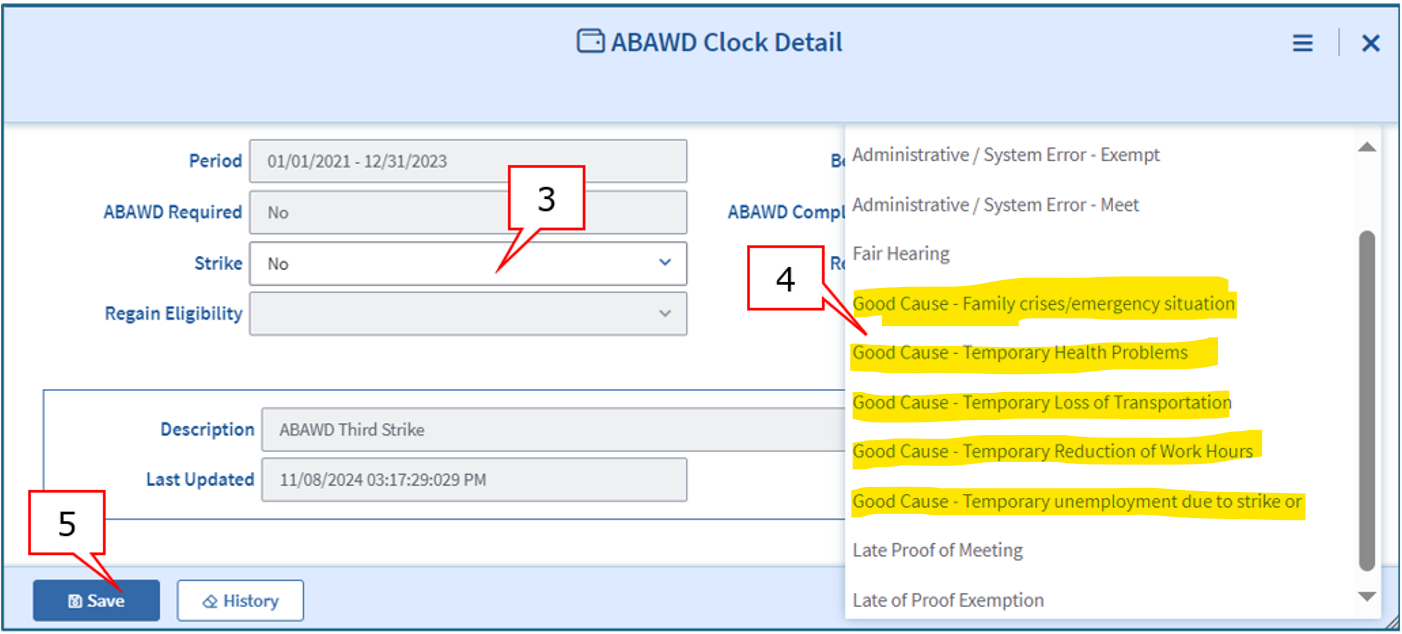
To record good cause in BEACON, you must:
- open the ABAWD Clock page
- for the strike month, click the icon under the Detail field to open the ABAWD Clock Detail
- in the Strike dropdown, select No
- in the Reason dropdown, select the applicable Good Cause reason
- click Save View/HideView/Hide
See ABAWD Clock Page for more details.
How Do I Record Good Cause for Future Months?
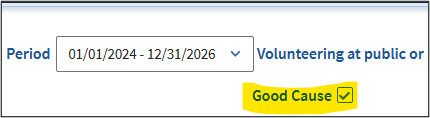
To record good cause for future months, you must use the Good Cause checkbox in the ABAWD Clock Page. Follow these steps:
- Open the ABAWD Clock Page
- Mark the Good Cause checkbox: View/HideView/Hide
- Enter the good cause start and end dates.
If the client does not know when the good cause will end, enter the date that is 6 months from the client’s reported start date. View/HideView/Hide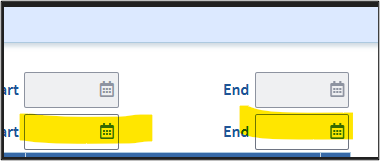
- Click Finish.
Once you set the start date, BEACON will check off the Good Cause box in the ABAWD Clock Detail for each month until the end date.
See ABAWD Clock Page for more details.
How Does the Client Verify Good Cause?
Good cause can be self-declared through a telephonic signature or in writing for the ABAWD Work Rules.
Last Update: December 15, 2025
|
|
|
||
| Digital Accessibility Statement | Privacy Policy | Site Policies | Public Records Requests |
|
© 2026 Commonwealth of Massachusetts. Mass.gov is a registered service mark of the Commonwealth of Massachusetts. |
|||